Havan Kundहवन कुण्ड
Kūrma-citi – the tortoise altarकूर्मचिति
Kūrma-citi
Documented Vedic altarप्रलेखित वैदिक वेदीDraft – awaiting expert reviewप्रारूप – विशेषज्ञ समीक्षा हेतु लम्बित
An optional (kāmyāgni) brick altar described as a tortoise (two forms are listed in the Huffman & Thuong table).एक वैकल्पिक (काम्याग्नि) ईंट-वेदी जिसे कछुआ (हफ़मैन व थुओंग तालिका में दो रूप सूचीबद्ध) बताया गया है।
Description & scriptural contextवर्णन व शास्त्रीय सन्दर्भ
Sundareswaran, citing the Taittirīya Saṃhitā, lists this altar as a tortoise (two forms are listed in the Huffman & Thuong table), with the desired object 'winning the world of Brahman / the Supreme Spirit'. Sundareswaran says the optional altars share the area of the standard Śyena altar (7½ square puruṣas) but differ in shape. Sundareswaran does not mention this altar; the tortoise appears in Wikipedia's Shulba Sutras summary ('a tortoise for the world of Brahman') and the Huffman & Thuong table. The Devanagari/IAST name is our rendering and needs confirmation.
सुन्दरेश्वरन, तैत्तिरीय संहिता के हवाले से, इस वेदी को कछुआ (हफ़मैन व थुओंग तालिका में दो रूप सूचीबद्ध) सूचीबद्ध करता है, और अभीष्ट 'ब्रह्मलोक/परमात्मा के लोक की प्राप्ति' बताता है। सुन्दरेश्वरन के अनुसार वैकल्पिक वेदियाँ मानक श्येन वेदी (7½ वर्ग-पुरुष) के समान क्षेत्रफल की होती हैं पर आकार भिन्न होते हैं। सुन्दरेश्वरन इस वेदी का उल्लेख नहीं करता; कछुआ विकिपीडिया (शुल्ब सूत्र) के सार ('ब्रह्मलोक के लिए कछुआ') और हफ़मैन व थुओंग तालिका में आता है। देवनागरी/IAST नाम हमारा रूपान्तर है और पुष्टि माँगता है।
Construction & measurementsनिर्माण व माप
Sundareswaran states that the optional (kāmyāgni) altars share the area of the standard Śyena-citi – 7½ square puruṣas – while differing in shape. Brick counts, layer counts and rope procedures are not reproduced here because we have not checked them against a critical edition.
सुन्दरेश्वरन के अनुसार वैकल्पिक (काम्याग्नि) वेदियों का क्षेत्रफल मानक श्येनचिति के समान – 7½ वर्ग-पुरुष – रहता है, आकार भिन्न होते हैं। ईंट-संख्या, स्तर-संख्या और रज्जु-विधि यहाँ नहीं दी गई क्योंकि हमने इन्हें किसी समीक्षित संस्करण से नहीं मिलाया।
Ritual context & fire safetyअनुष्ठान-सन्दर्भ व अग्नि-सुरक्षा
Agnicayana-type altars are built and used only in large, supervised rituals. This page is educational; it is not a construction guide.
अग्निचयन-प्रकार की वेदियाँ केवल बड़े, पर्यवेक्षित अनुष्ठानों में बनती हैं। यह पृष्ठ शैक्षिक है, निर्माण-निर्देशिका नहीं।
Traditional significance (tradition, not evidence)पारम्परिक महत्त्व (परम्परा, प्रमाण नहीं)
The source lists the desired object as 'winning the world of Brahman / the Supreme Spirit'. This is the ritual text's stated purpose – a traditional claim – and is not evidence of any real-world effect.
स्रोत अभीष्ट 'ब्रह्मलोक/परमात्मा के लोक की प्राप्ति' बताता है। यह ग्रन्थ का घोषित उद्देश्य – पारम्परिक दावा – है, किसी वास्तविक प्रभाव का प्रमाण नहीं।
Uncertainty & disputed pointsअनिश्चितता व विवादित बिन्दु
Name spelling is editorial; text source (Śulba/Saṃhitā) not checked directly.
नाम की वर्तनी सम्पादकीय है; मूल ग्रन्थ (शुल्ब/संहिता) सीधे नहीं जाँचा।
References & bibliographyसन्दर्भ व ग्रन्थ-सूची
- Scholarly / institutionalविद्वत् / संस्थागत Ancient Indian Rope Geometry in the Classroom – Fire Altars of Ancient India — Cynthia J. Huffman and Scott V. Thuong open sourceस्रोत खोलें
- Encyclopedic (secondary)विश्वकोशीय (द्वितीयक) Shulba Sutras — Wikipedia contributors open sourceस्रोत खोलें
Relatedसम्बन्धित
Śrauta altar (vedi / citi)श्रौत वेदी (वेदि / चिति)
Śyena-citi – the falcon altarश्येनचिति
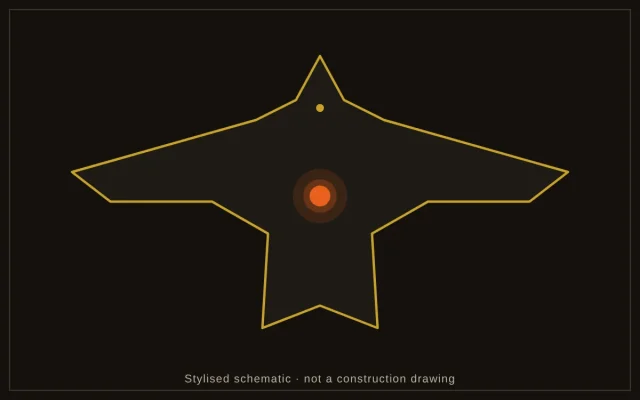
An optional (kāmyāgni) brick altar described as a falcon or hawk.एक वैकल्पिक (काम्याग्नि) ईंट-वेदी जिसे बाज़ (श्येन) बताया गया है।
Śrauta altar (vedi / citi)श्रौत वेदी (वेदि / चिति)
Mahāvedi – the Great Altarमहावेदी (सौमिकी वेदि)
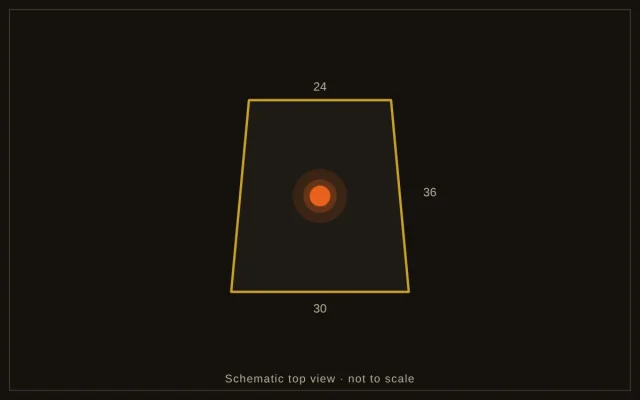
The large ritual ground of the Soma sacrifice, described as an isosceles trapezium.सोम-यज्ञ की विशाल यज्ञ-भूमि, जिसे समद्विबाहु समलम्ब चतुर्भुज बताया गया है।
Śrauta altar (vedi / citi)श्रौत वेदी (वेदि / चिति)
Uttaravedi – the northern altarउत्तरवेदी
A raised altar associated with the Soma sacrifice; in the Agnicayana it is built of bricks in falcon form.सोम-यज्ञ से जुड़ी उठी हुई वेदी; अग्निचयन में यह ईंटों से बाज़ के आकार में बनती है।
Śrauta altar (vedi / citi)श्रौत वेदी (वेदि / चिति)
Kaṅka-citi – the heron altarकङ्कचिति
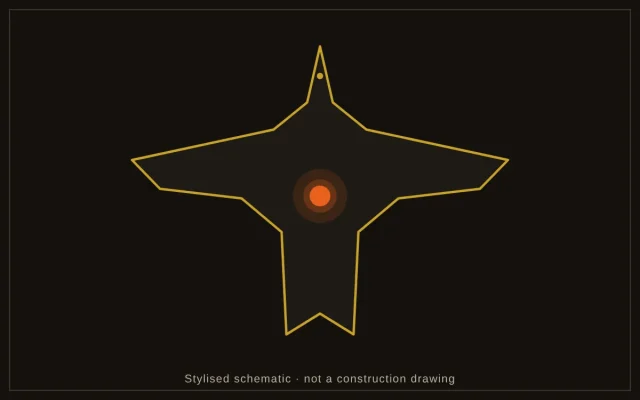
An optional (kāmyāgni) brick altar described as a heron (kaṅka).एक वैकल्पिक (काम्याग्नि) ईंट-वेदी जिसे बगुला/कङ्क पक्षी बताया गया है।