Havan Kundहवन कुण्ड
Gārhapatya fire-hearthगार्हपत्य अग्नि
Gārhapatya
Documented Vedic altarप्रलेखित वैदिक वेदीDraft – awaiting expert reviewप्रारूप – विशेषज्ञ समीक्षा हेतु लम्बित
The householder's fire, one of the three nitya fires of the Śrauta tradition. Sources disagree on whether it is round or square.गृहपति की अग्नि, श्रौत परम्परा की तीन नित्य अग्नियों में से एक। इसके गोल या चौकोर होने पर स्रोत भिन्न हैं।
Description & scriptural contextवर्णन व शास्त्रीय सन्दर्भ
Sundareswaran states the Gārhapatya is square and adds that some texts prescribe a circular shape. Huffman & Thuong (2015) describes it as circular, at the western end. Wikipedia's Vedi article, as we read it, also gives round and west. We present both because we could not resolve them against a primary Śrauta Sūtra edition. The diagram shows the round form and is labelled 'sources differ'. Sundareswaran also cites the Taittirīya Saṃhitā for a 21-brick construction.
सुन्दरेश्वरन के अनुसार गार्हपत्य चौकोर है और कुछ ग्रन्थ गोल आकार भी विहित करते हैं। हफ़मैन व थुओंग (2015) इसे पश्चिमी छोर पर गोल बताता है। विकिपीडिया का Vedi लेख भी, हमारे पाठ के अनुसार, गोल और पश्चिम बताता है। मूल श्रौतसूत्र संस्करण से हम इसे हल नहीं कर सके, इसलिए दोनों मत दिए हैं। चित्र गोल रूप दिखाता है और 'स्रोत भिन्न' चिह्नित है। सुन्दरेश्वरन तैत्तिरीय संहिता के हवाले से 21 ईंटों का निर्माण भी बताता है।
Construction & measurementsनिर्माण व माप
Sundareswaran states each of the three nitya fires has an area of one square puruṣa (shapes differ) and that the Gārhapatya is built with 21 bricks (Taittirīya Saṃhitā V-2-3-5). We have not independently verified the unit conversion; do not build from this page.
सुन्दरेश्वरन के अनुसार तीनों नित्य अग्नियों का क्षेत्रफल एक वर्ग-पुरुष है (आकार भिन्न) और गार्हपत्य 21 ईंटों से बनता है (तैत्तिरीय संहिता V-2-3-5)। इकाई-परिवर्तन की हमने स्वतन्त्र पुष्टि नहीं की; इस पृष्ठ से निर्माण न करें।
Ritual context & fire safetyअनुष्ठान-सन्दर्भ व अग्नि-सुरक्षा
Śrauta fires are kept by trained ritualists in prepared grounds. This page is educational only; it is not instruction for kindling or tending such fires.
श्रौत अग्नियों का संरक्षण प्रशिक्षित याज्ञिक तैयार भूमि में करते हैं। यह पृष्ठ केवल शैक्षिक है; ऐसी अग्नि जलाने या सँभालने का निर्देश नहीं।
Traditional significance (tradition, not evidence)पारम्परिक महत्त्व (परम्परा, प्रमाण नहीं)
Described in the sources as the householder's terrestrial fire (Huffman & Thuong: symbolising the terrestrial world). This is the sources' symbolism, not a verified claim.
स्रोतों में इसे गृहपति की पार्थिव अग्नि बताया गया है (हफ़मैन व थुओंग: पार्थिव लोक का प्रतीक)। यह स्रोतों का प्रतीकवाद है, सत्यापित दावा नहीं।
Uncertainty & disputed pointsअनिश्चितता व विवादित बिन्दु
Round vs square Conflict between Sundareswaran and Huffman & Thuong/Wikipedia. Needs a Śrauta Sūtra specialist.
गोल बनाम चौकोर – सुन्दरेश्वरन और हफ़मैन व थुओंग/विकिपीडिया में विरोध। श्रौतसूत्र विशेषज्ञ आवश्यक।
References & bibliographyसन्दर्भ व ग्रन्थ-सूची
- Scholarly / institutionalविद्वत् / संस्थागत Śulbasūtra-s: the source book of Vedic Geometry — N. K. Sundareswaran (Dept. of Sanskrit, University of Calicut) open sourceस्रोत खोलें
- Scholarly / institutionalविद्वत् / संस्थागत Ancient Indian Rope Geometry in the Classroom – Fire Altars of Ancient India — Cynthia J. Huffman and Scott V. Thuong open sourceस्रोत खोलें
- Encyclopedic (secondary)विश्वकोशीय (द्वितीयक) Vedi (altar) — Wikipedia contributors open sourceस्रोत खोलें
Relatedसम्बन्धित
Śrauta fire-hearthश्रौत अग्नि-स्थान
Āhavanīya fire-hearthआहवनीय अग्नि
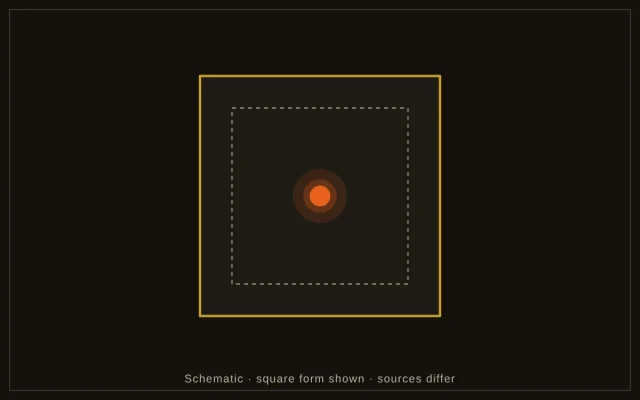
The fire into which offerings to the deities are made in the Śrauta rites. Sources disagree on whether it is square or circular.वह अग्नि जिसमें श्रौत यज्ञों में देवों के लिए आहुतियाँ दी जाती हैं। इसके चौकोर या गोल होने पर स्रोत भिन्न हैं।
Śrauta fire-hearthश्रौत अग्नि-स्थान
Dakṣiṇāgni fire-hearthदक्षिणाग्नि
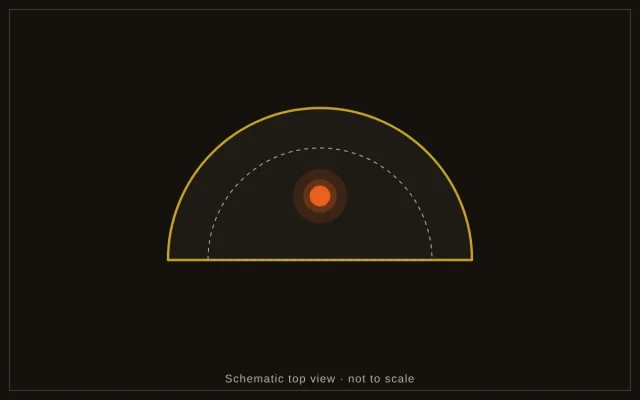
The southern nitya fire. Sundareswaran describes it as semicircular; Huffman & Thuong does not state its shape.दक्षिण दिशा की नित्य अग्नि। सुन्दरेश्वरन इसे अर्धवृत्ताकार बताता है; हफ़मैन व थुओंग इसका आकार नहीं बताता।
Household / popular havan vesselगृहस्थ / लोकप्रिय हवन कुण्ड
Circular havan kundवृत्त कुण्ड
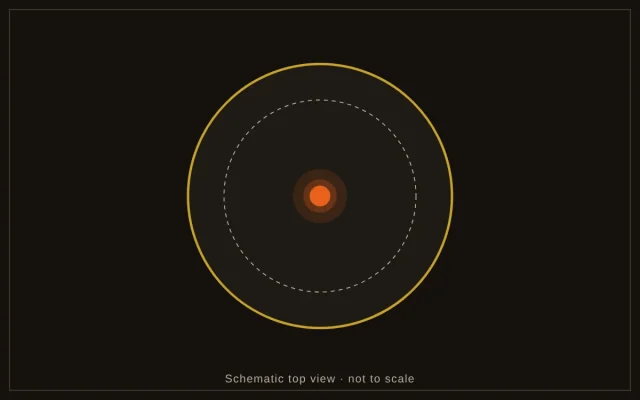
A circular kund, named vṛtta or vṛttākāra in sources we consulted.एक गोलाकार कुण्ड, जिसे हमारे देखे स्रोतों में वृत्त या वृत्ताकार कहा गया है।
Household / popular havan vesselगृहस्थ / लोकप्रिय हवन कुण्ड
Semicircular (half-moon) havan kundअर्धचन्द्र कुण्ड
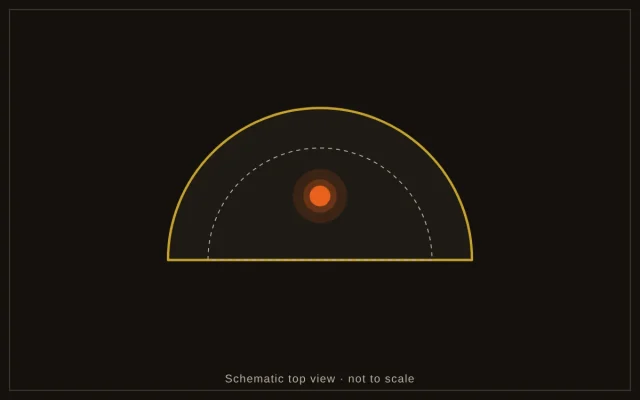
A half-moon (semicircular) kund, listed by IGNCA and by the Bhavishya-attributed popular list.अर्धचन्द्र (अर्धवृत्त) कुण्ड, जिसे IGNCA और भविष्य-आरोपित लोकप्रिय सूची में गिना गया है।