Havan Kundहवन कुण्ड
Paricāyya-citi – the circular altarपरिचाय्यचिति
Paricāyya-citi
Documented Vedic altarप्रलेखित वैदिक वेदीDraft – awaiting expert reviewप्रारूप – विशेषज्ञ समीक्षा हेतु लम्बित
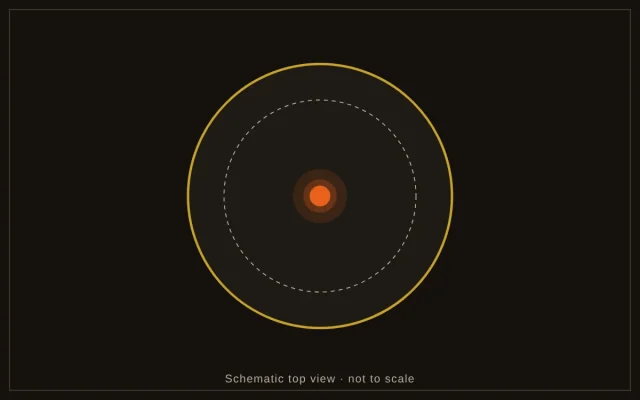
An optional (kāmyāgni) brick altar described as a circle.एक वैकल्पिक (काम्याग्नि) ईंट-वेदी जिसे वृत्त बताया गया है।
Description & scriptural contextवर्णन व शास्त्रीय सन्दर्भ
Sundareswaran, citing the Taittirīya Saṃhitā, lists this altar as a circle, with the desired object 'a vast area of land / a village'. Sundareswaran says the optional altars share the area of the standard Śyena altar (7½ square puruṣas) but differ in shape.
सुन्दरेश्वरन, तैत्तिरीय संहिता के हवाले से, इस वेदी को वृत्त सूचीबद्ध करता है, और अभीष्ट 'विस्तृत भूमि / ग्राम' बताता है। सुन्दरेश्वरन के अनुसार वैकल्पिक वेदियाँ मानक श्येन वेदी (7½ वर्ग-पुरुष) के समान क्षेत्रफल की होती हैं पर आकार भिन्न होते हैं।
Construction & measurementsनिर्माण व माप
Sundareswaran states that the optional (kāmyāgni) altars share the area of the standard Śyena-citi – 7½ square puruṣas – while differing in shape. Brick counts, layer counts and rope procedures are not reproduced here because we have not checked them against a critical edition.
सुन्दरेश्वरन के अनुसार वैकल्पिक (काम्याग्नि) वेदियों का क्षेत्रफल मानक श्येनचिति के समान – 7½ वर्ग-पुरुष – रहता है, आकार भिन्न होते हैं। ईंट-संख्या, स्तर-संख्या और रज्जु-विधि यहाँ नहीं दी गई क्योंकि हमने इन्हें किसी समीक्षित संस्करण से नहीं मिलाया।
Ritual context & fire safetyअनुष्ठान-सन्दर्भ व अग्नि-सुरक्षा
Agnicayana-type altars are built and used only in large, supervised rituals. This page is educational; it is not a construction guide.
अग्निचयन-प्रकार की वेदियाँ केवल बड़े, पर्यवेक्षित अनुष्ठानों में बनती हैं। यह पृष्ठ शैक्षिक है, निर्माण-निर्देशिका नहीं।
Traditional significance (tradition, not evidence)पारम्परिक महत्त्व (परम्परा, प्रमाण नहीं)
The source lists the desired object as 'a vast area of land / a village'. This is the ritual text's stated purpose – a traditional claim – and is not evidence of any real-world effect.
स्रोत अभीष्ट 'विस्तृत भूमि / ग्राम' बताता है। यह ग्रन्थ का घोषित उद्देश्य – पारम्परिक दावा – है, किसी वास्तविक प्रभाव का प्रमाण नहीं।
Uncertainty & disputed pointsअनिश्चितता व विवादित बिन्दु
Shape described in words by the sources; the drawn outline is a schematic.
स्रोत शब्दों में आकार बताते हैं; बनाया गया रेखाचित्र योजनात्मक है।
References & bibliographyसन्दर्भ व ग्रन्थ-सूची
- Scholarly / institutionalविद्वत् / संस्थागत Śulbasūtra-s: the source book of Vedic Geometry — N. K. Sundareswaran (Dept. of Sanskrit, University of Calicut) open sourceस्रोत खोलें
- Scholarly / institutionalविद्वत् / संस्थागत Ancient Indian Rope Geometry in the Classroom – Fire Altars of Ancient India — Cynthia J. Huffman and Scott V. Thuong open sourceस्रोत खोलें
- Encyclopedic (secondary)विश्वकोशीय (द्वितीयक) Shulba Sutras — Wikipedia contributors open sourceस्रोत खोलें
Relatedसम्बन्धित
Śrauta altar (vedi / citi)श्रौत वेदी (वेदि / चिति)
Rathacakra-citi – the chariot-wheel altarरथचक्रचिति
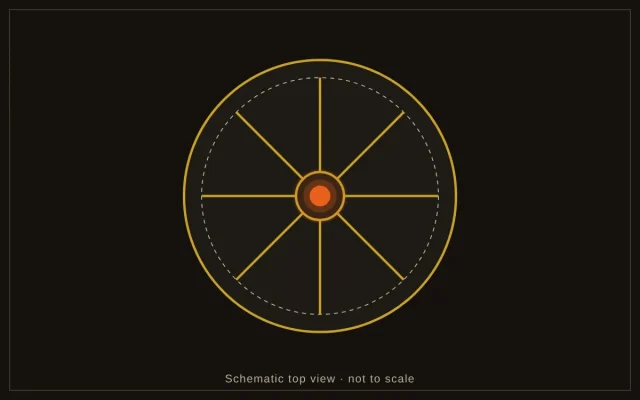
An optional (kāmyāgni) brick altar described as a chariot wheel.एक वैकल्पिक (काम्याग्नि) ईंट-वेदी जिसे रथ का चक्र बताया गया है।
Household / popular havan vesselगृहस्थ / लोकप्रिय हवन कुण्ड
Circular havan kundवृत्त कुण्ड
A circular kund, named vṛtta or vṛttākāra in sources we consulted.एक गोलाकार कुण्ड, जिसे हमारे देखे स्रोतों में वृत्त या वृत्ताकार कहा गया है।
Household / popular havan vesselगृहस्थ / लोकप्रिय हवन कुण्ड
Semicircular (half-moon) havan kundअर्धचन्द्र कुण्ड
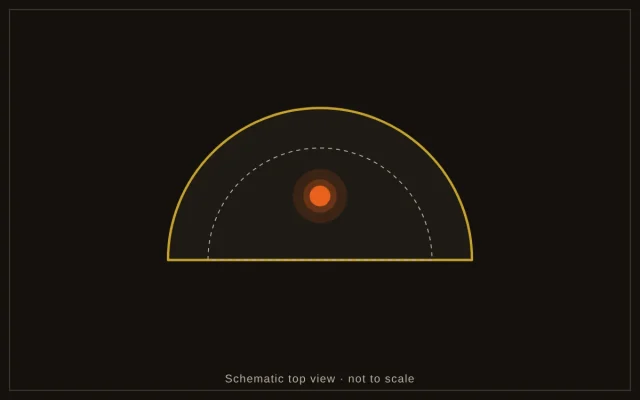
A half-moon (semicircular) kund, listed by IGNCA and by the Bhavishya-attributed popular list.अर्धचन्द्र (अर्धवृत्त) कुण्ड, जिसे IGNCA और भविष्य-आरोपित लोकप्रिय सूची में गिना गया है।
Śrauta fire-hearthश्रौत अग्नि-स्थान
Gārhapatya fire-hearthगार्हपत्य अग्नि
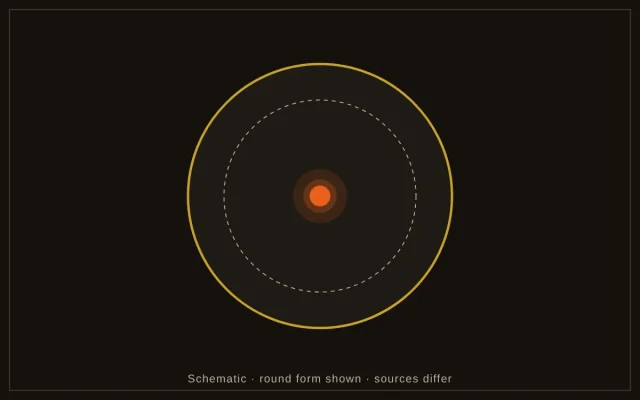
The householder's fire, one of the three nitya fires of the Śrauta tradition. Sources disagree on whether it is round or square.गृहपति की अग्नि, श्रौत परम्परा की तीन नित्य अग्नियों में से एक। इसके गोल या चौकोर होने पर स्रोत भिन्न हैं।